

How to Recognize Progress During Trauma Therapy
September 8, 2026
How Long Does EMDR Therapy Take to Work
September 23, 2026
Quick AnswerPrayer and counseling are not competing paths to healing. They often work best together. Prayer comforts and offers hope, while counselling provides a structured, tool-based way to work through pain. Faith-based counseling in Columbus helps people make real and measurable progress while receiving spiritual support. |
Emotional struggles rarely appear as one clear event. Difficulties can grow exponentially because of sleepless nights, short tempers, and an underlying heaviness. Many people of faith turn to prayer for peace or the strength to keep going. Prayer offers real comfort, but it does not always unravel what is causing our suffering.
Professional assistance has its place, though it does not replace your faith. A Counselor who understands both emotional health and spiritual belief can help uncover what is really driving the struggle. Individuals do not have to put aside their faith when they choose faith-based counseling in Columbus, which keeps the focus on people’s beliefs during healing rather than on the therapy.
Understanding the Role Faith Plays in Emotional Healing
Healing emotional traumas that may arise as a result of stress, grief, or anxiety, where the person’s beliefs do not leave the solution behind but rather include the solution, and ultimately grow out of them. It combines prayer or reflection with effective counseling techniques to help the whole person, not just the symptoms.
This method frequently influences multiple facets of our everyday lives:
- Staying emotionally balanced during stress
- A feeling of hope and purpose may grow
- Healthier alternatives to deal with grief or loss
- People have a renewed trust in community and relationships
Faith & Mental Health Support in the US
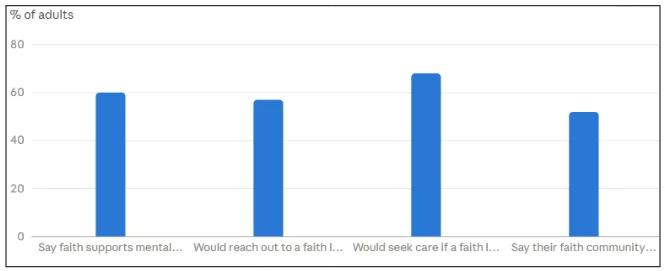 Source: American Psychiatric Association Foundation, Healthy Minds Poll
These changes often don’t happen all at once. Progress is more often fewer days that leave us feeling overwhelmed and more like a fix, which is part of the reason faith-based trauma counseling emphasises layering growth over fixing.
Bringing Prayer and Professional Counseling Together in Practice
The next step, once someone realizes that both prayer and counseling have a role in healing, is to appreciate how the two work together in daily life.
Starting Sessions With Prayer or Reflection
Faith-inspired counseling sessions usually begin with a short prayer or silence. It sets the stage for a calm conversation and reminds them that their beliefs are welcome as the deep conversation continues.
What This Often Looks Like:
- Invocation of a short prayer to commence
- Please precede the dive with a moment of reflection
- Scripture used whenever it feels appropriate
- Allowing time during the session to pray
While this little ritual doesn’t replace the clinical work to come, it usually makes the rest of the session less daunting. Before booking, people want to know what faith-based counseling in Columbus usually involves.
Naming Emotions Without Losing Faith
Many believe that naming painful emotions means distrusting your faith. A trained counselor helps separate honest feelings from spiritual failure and speak of sadness or fear without guilt.
Ways Counselors Help Untangle This:
- Differentiating feelings from moral judgment
- It’s okay not to be sure sometimes
- Being honest is better than being positive
- Reframing difficulty as part of growth, not failure
When there’s no guilt involved, people find it easy to say exactly what they are feeling. Over time, this becomes the foundation of faith-based counseling and emotional resilience.
Involving Community and Church Support
People seldom heal alone. Many draw courage from their church or small group as well as from individual sessions. Counselors usually promote this aid rather than treating it separately from therapy.
How Community Support Often Helps:
- Reliability from reliable friends or mentors
- Urge to attend your sessions consistently
- Feeling included and loved through life’s challenges
- Prayer in common beyond appointed times
Community and counseling grow together so that people feel less lonely in the midst of their struggle. Couples counseling, where partners pull together on faith, often provides similar support.
What Working Together Can Look Like Over Time
The combination of prayer and counseling does not follow a fixed formula and can change according to the season a person is in. The pattern below depicts the shifts in balance that often happen as healing takes effect.
|
Season |
What It Often Looks Like |
Where Counseling Helps Most |
|
Early Struggle |
Leaning heavily on prayer for comfort |
Building trust and naming the real issue |
|
Active Processing |
Prayer and sessions used side by side |
Working through pain with guided tools |
|
Steadier Ground |
Prayer becomes reflective, not just urgent |
Reinforcing coping skills for future stress |
|
Ongoing Growth |
Faith and self-awareness reinforce each other |
Checking in during new life challenges |
Revisiting an earlier stage during a tough week is common because the seasons do not usually follow a straight line or a set order. The same rhythm further flows in faith-based counseling to strengthen family relationships as change occurs in the home.
Using Scripture and Coping Tools Side by Side
Faith-shaped counseling often blends well-practiced Scripture or spiritual practices with useful coping tools. They do not replace each other. They complement one another in support of the same goal.
Tools Commonly Used Together:
- Perform prayers and practice breathing.
- Scripture-centered ideas for journal entries.
- Reframing cognitive approaches with faith-based affirmations
- Techniques to use before or after prayer.
Pairing familiar spiritual habits with structured tools makes both feel more natural and easier to maintain long-term.
Taking the Next Step Toward Healing
Healing does not require choosing between faith and professional help. The two can move together, each supporting a different part of the same journey. For guidance that respects your beliefs while offering real, practical support, Columbus Care Center is here to help. Book a session today and take the next step toward the peace you deserve.
Frequently Asked Questions
Can counseling weaken someone’s faith instead of strengthening it?
Good counseling supports faith rather than challenging it, helping people process emotions honestly without feeling pressured to abandon their beliefs.
How do I know if I need counseling instead of just praying more?
If prayer alone hasn’t eased ongoing sadness, anxiety, or exhaustion after several weeks, counseling can help identify what’s really happening.
Will a counselor judge my religious beliefs during sessions?
A good faith-based counselor respects your beliefs and works within them, rather than questioning or dismissing your spiritual convictions.