

How Couples Therapy Can Help Partners Rebuild Closeness
September 2, 2026
How Prayer and Counseling Can Work Together During Emotional Struggles
September 18, 2026
Quick AnswerMaking progress during trauma therapy often doesn’t appear so serious initially. It can help you feel a bit calmer, sleep better, or react less intensely to past triggers. Scheduling consistent trauma recovery therapy in Columbus assists in making smaller changes that build into long-term change. |
Trauma therapy hardly follows a straight path. This makes progress tough to see when you’re in the middle of it. A couple of weeks might feel like a real breakthrough, while others might feel like you are back where you started.
Such unevenness is quite normal. However, it doesn’t mean the work isn’t paying off. It typically means healing happens in layers, not all at once. So, understanding how real progress appears in trauma recovery therapy in Columbus helps you notice changes you might otherwise miss.
What Progress Actually Looks Like in Trauma Recovery
Speaking of achieving progress through trauma therapy, it is often not obvious or dramatic. It surfaces as small changes in how your thought process works and how you feel or respond to stress. It doesn’t follow a clear moment where everything suddenly feels entirely resolved.
These changes often surface across a few different areas. It includes:
- Emotional reactions and mood
- Sleep and physical tension
- Relationships and trust
- Daily habits and coping
Because these areas are interconnected, a change in one can create small ripple effects in the others, even if the connections don’t seem obvious.
PTSD Symptom Progress During Trauma Therapy
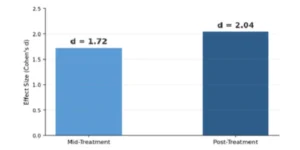
Source: European Journal of Psychotraumatology (PubMed Central, NIH)
It’s one of the main reasons why trauma counseling in Columbus works best as a consistent process instead of an immediate fix. Real change often unfolds slowly across all those areas.
Signs That Trauma Therapy Is Actually Working
Here are a couple of indicators that surface whenever trauma therapy progresses and helps you heal:
Feeling More Present and Less Disconnected
At the onset of treatment, it’s common for most people to feel numb, foggy or checked out during their daily life. As therapy starts, moments feel more grounded, and being fully present becomes more frequent and easier to notice.
What Being More Present Feels Like:
- Fewer recurring episodes of zoning out
- Feeling more present in your body
- Noticing your surroundings in a clear manner
- Recalling conversations completely
For individuals experiencing dissociation besides trauma, this change becomes one of the clear signs of progress. This is because trauma therapy for dissociative disorder treatment targets rebuilding a better sense of presence.
Reacting Less Intensely to Old Triggers
Traumatic reminders such as specific places, sounds, or anniversaries often lose their grip as treatment progresses. What once caused a completely blown-out reaction might start to feel more like a passing wave.
Signs Triggers Are Losing Their Grip:
- Shorter, less intense reactions
- Recovering more quickly afterward
- Fewer avoidance behaviors overall
Several individuals would start noticing this change right after any memory-focused work. This is because EMDR therapy is structured to help the brain reprocess every triggering memory so that it can carry less emotional charge.
Noticing Steadier Sleep and Physical Calm
Trauma often lives in the body long before it shows up anywhere else, appearing as tense shoulders, shallow breathing, or restless nights. As progress builds, sleep tends to deepen and physical tension gradually starts to ease.
Physical Signs Worth Paying Attention To:
- Falling asleep more easily
- Fewer nightmares or night waking
- Less muscle tension throughout the day
- A calmer resting heart rate
These physical changes are easy to overlook, but they often reflect real healing happening beneath the surface, even before you notice it emotionally.
Recognizing When Progress Plateaus
Progress in trauma therapy is rarely constant, and plateaus or temporary setbacks are a completely normal part of the process. Noticing a stall doesn’t mean therapy has failed; it often means something needs adjusting.
Signs It Might Be Time to Reassess:
- Feeling stuck for several weeks straight
- Sessions feel repetitive without new insight
- Old symptoms returning at full strength
A plateau is often the right moment to talk with your therapist about adjusting the approach, since knowing when to choose trauma therapy that targets a different angle can help momentum pick back up.
Rebuilding Connection With People and Life
As healing progresses, many people notice they are showing up more fully in relationships, work, and everyday activities they once avoided. Reconnecting with life outside of therapy is often one of the clearest signs that treatment is working.
Ways Reconnection Often Shows Up:
- Saying yes to social plans again
- Feeling closer to family or friends
- Returning to hobbies you had dropped
- Trusting people more easily
Some people do not realize they were showing signs of High-Functioning Trauma until they notice how different genuine connection feels now that coping does not require holding everything together alone.
What Progress Can Look Like at Each Stage
Progress does not look the same on day one as it does several months in, and knowing what to expect at each stage can ease unnecessary worry.
|
Stage |
What You Might Notice |
Therapy’s Focus at This Stage |
|
Early Sessions |
Feeling safer talking about hard topics |
Building trust and emotional safety |
|
Middle Treatment |
Calmer reactions to triggers and reminders |
Processing traumatic memories directly |
|
Later Treatment |
Reconnecting with people and daily routines |
Integrating changes into everyday life |
|
Long-Term Maintenance |
Handling stress without losing ground |
Reinforcing coping skills long term |
These stages rarely follow a strict timeline, and some people move through them faster or slower depending on their history and circumstances.
You Don’t Have to Measure Progress Alone
It is easy to be your own harshest critic when healing feels slow, but growth is still growth even when it is hard to see from the inside. Give yourself the same patience you would offer someone else.
Columbus Care Center works alongside you throughout treatment, helping you notice and build on every bit of progress. Book a session today and start moving toward the healing you deserve.
Frequently Asked Questions
Is it normal to feel worse before feeling better in trauma therapy?
Yes, this is common, especially early in treatment, since processing painful memories can temporarily increase discomfort before real symptoms improve.
How long does it typically take to see progress?
It varies widely, but many people start noticing small shifts within just a few short weeks of consistent, focused sessions.
Can progress in therapy be undone by a stressful event?
A stressful event can bring symptoms back temporarily, but it does not erase all the progress you have already built.


