

How Prayer and Counseling Can Work Together During Emotional Struggles
September 18, 2026
Quick AnswerWhen choosing EMDR therapy in Columbus, the timelines vary significantly based on the type and the severity of trauma being treated. For a single, recent traumatic event, some people may find meaningful relief in 6 to 12 sessions. Complex or long-standing trauma takes several months of ongoing work. |
Before starting EMDR therapy, people often ask about how long the therapy takes to work. Based on research, EMDR brings significant relief in as few as six to twelve sessions for a single traumatic event. However, the timeline changes once multiple traumas or prolonged patterns are involved.
That range varies since trauma therapy timelines rely on more than just a diagnosis alone. It depends on personal history, existing mental stability, and how the brain processes distressing memories. So, choosing EMDR therapy in Columbus can help you get a clear idea of the timeline for your specific condition.
How EMDR Therapy Actually Works
EMDR, or Eye Movement Desensitization and Reprocessing, is a structured therapy that helps the brain reprocess distressing memories. It implements guided eye movements or other bilateral stimulation. The therapy is designed to reduce emotional intensity attached to traumatic memories without the need for a thorough verbal retelling.
A typical course of EMDR therapy generally moves through a few key phases, such as:
A typical course of EMDR therapy moves through a few key phases. It includes:
- Building safety and coping skills
- Identifying target memories
- Reprocessing memories through bilateral stimulation
- Strengthening positive beliefs
Every phase stands on an outcome. That is why rushing through therapy rarely produces the same lasting outcomes as working through it at a steadier pace.
PTSD Symptom Improvement After An Average of 10.4 EMDR Sessions
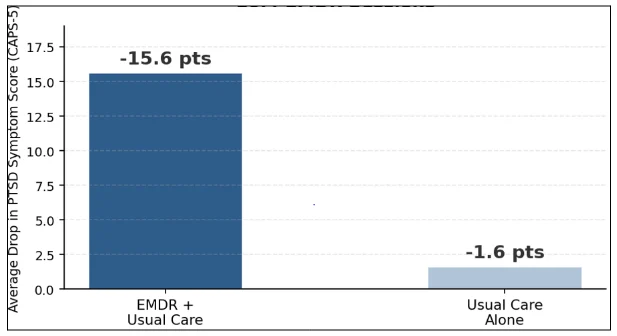 Source: EMERALD feasibility trial (PubMed Central, NIH)
This is why working with an experienced EMDR therapist in Columbus matters most. It is the best way to pace each phase properly, since that pacing shapes your final progress.
What Shapes Your EMDR Treatment Timeline
Here are a couple of factors that affect the timeline of EMDR therapy and how long it takes to show real results.
The Type and Severity of the Trauma
A one-time, recent traumatic event responds faster to EMDR compared to trauma that built up over the years. Repeated or complex trauma typically involves more preparation before the in-depth reprocessing work can begin safely.
Factors That Affect This Timeline
- Whether trauma is a single event
- How long ago it happened
- Whether multiple traumas are involved
This is why two people with different histories may follow different timelines, even if they see the same therapist. EMDR therapy for complex trauma often needs additional preparation before deeper processing.
How Consistently You Attend Sessions
EMDR often works best with consistent, ongoing sessions rather than long gaps between appointments. Skipping weeks or spacing sessions can slow momentum and sometimes requires revisiting material already covered in previous sessions.
Ways Consistency Supports Progress
- Weekly or biweekly sessions
- Fewer long gaps between appointments
- Practicing coping skills between sessions
Following a regular schedule, even with a hectic life, keeps the process moving smoothly. Consistency such as this is one of the simplest ways to get better outcomes during trauma recovery therapy.
Your Overall Sense of Safety and Stability
EMDR includes an integral preparation phase focused on building coping skills and emotional stability before any sort of trauma processing begins. People who are grounded in daily life often move through this phase pretty quickly.
Signs of Growing Stability
- Reliable sleep and daily routines
- A support system outside therapy
- Basic coping tools are in place
Establishing this sort of foundation isn’t a waste of time. It makes deeper reprocessing work seamless later on. This is extremely important with EMDR therapy to heal childhood trauma, as stability takes longer to establish.
Whether Other Conditions Are Also Present
Other psychological conditions, such as depression, anxiety, and dissociation, often accompany trauma. All can affect the pace of EMDR therapy. Comprehensive interventions can support more consistent overall growth when they address overlapping disorders.
Conditions That Can Affect Pace
- Persistent anxiety or distress
- A lack of enthusiasm or desire
- Dissociation during sessions
Being open and clear about what you’re experiencing can help your therapist adjust the pace to match your needs better. This clarity plays an integral part in choosing between EMDR and traditional therapy.
How You Personally Respond to Reprocessing
From person to person, the brain processes memory somewhat differently, and some notice relief in a few sessions, while others need more. Both speeds are neither too slow nor too fast, as EMDR runs at the speed the person can safely manage.
What Influences Individual Response
- Natural emotional response style
- Familiarity with reprocessing technique
- Overall resilience and support system
Comparing yourself to another person’s timeline isn’t helpful; it’s about you and your pace.
How Timelines Can Vary by Situation
No treatment regimen is ever identical, but some trends appear to emerge depending on the types of trauma and their histories.
|
Situation |
Typical Session Range |
What Influences This |
|
Single recent event |
3 to 12 sessions |
Isolated memory, fewer complicating factors |
|
Multiple past traumas |
12 to 25+ sessions |
More memories to process, longer preparation |
|
Complex or childhood trauma |
Several months to a year or more |
Extensive preparation, layered processing |
|
Trauma with co-occurring conditions |
Varies, often longer |
Additional conditions treated alongside trauma |
These frequency ranges are basic guidelines; your therapist may adjust the plan based on your response.
Healing Happens on Your Own Timeline
No one has a perfect number of sessions. Don’t compare yourself to someone at the same moment. It’s not fair to either of you. Above all, find your own sustainable pace.
With care and skill, Columbus Care Center offers expert EMDR therapy customized to your history and pace of recovery. Book a session today and take the first step toward lasting relief.
Frequently Asked Questions
Will EMDR work for you in a few sessions or a few months?
Indeed, some people report good outcomes for one significant traumatic memory with just 3 to 6 sessions of work.
Does EMDR take longer than talk therapy?
Hardly. A lot of people discover EMDR is speedier than talk therapy, as it essentially targets the memory as opposed to just speaking about it.
Should progress slow more or less over the middle distance?
Temporary plateaus occur often, and they often signal that you’re trying to go faster, not that treatment isn’t working.